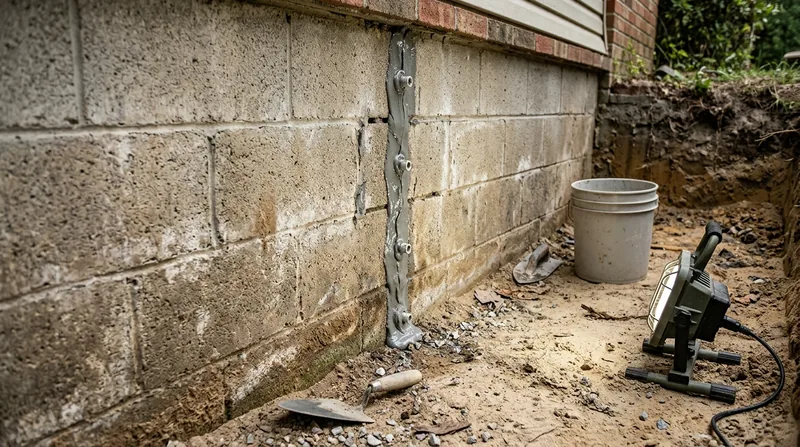




Foundation Crack Repair in Jacksonville: Below-Grade Cracks in Sandy Coastal Soil
Jacksonville sits on sandy coastal plain soil with a water table only a few feet down, and most homes here are slab-on-grade ranches and subdivisions built from the 1960s through the 2020s. That means Foundation Crack Repair in Jacksonville is rarely about a full basement. It is about cracks in slab edges, block stem walls, and the poured walls of the few walkout lots near the drainages off Gum Branch Road and Piney Green Road. When tropical rain stacks up, water rises fast and stands against the slab edge, and any crack becomes a path. We inspect every crack, match it to the right method, and tell you plainly when sealing is enough and when pressure is the real problem. If water is already inside, start with a basement waterproofing assessment before you patch anything.
Why Cracks Open Fast in Jacksonville's Sandy Soil and High Water Table
Onslow County's ground is sandy coastal plain with clay pockets along the creek bottoms, and that mix moves differently than inland clay. After a summer thunderstorm or a system like Florence in 2018, hydrostatic pressure builds against the slab edge within hours. The soil gives, the slab edge shifts, and hairline cracks widen into active leaks. Older brick ranches off Western Boulevard and Richlands Highway show it first at the block stem wall and the garage slab.
- Water rises to within a few feet of grade, so slab-edge cracks see pressure far more often than inland homes do.
- Clay pockets along creek bottoms hold water and swell, then shrink in dry spells, working cracks open and shut.
- 2000s and 2020s subdivisions off Piney Green Road and Gum Branch Road often have shallow footing drains that clog with sand.
- Efflorescence and white mineral staining on block walls signal water moving through the masonry, not just a surface stain.
- Window wells on walkout lots fill fast and push water against the wall at the sill line.
Any one of these signs means the crack deserves a look before the next storm season, not after.
Key info: A home off Richlands Highway with a damp garage slab after every heavy rain is a classic Jacksonville pattern. The crack is often at the slab edge, and the fix is injection plus grading and a downspout extension, not a full excavation.
For official guidance on structural repair permits, check the City of Jacksonville building department at jacksonvillenc.gov; thresholds vary and must be verified before work starts.
How We Diagnose and Repair Foundation Cracks in Jacksonville
We start by finding out what the crack is doing, not just where it is. A hairline crack that seeps after rain is a different job from a stair-step crack in a block wall that has moved. We map the crack, check for movement, look at grading and downspouts, and test whether water is entering under pressure. Then we pick the method that fits.
- We walk the foundation and mark every crack, including slab edges, stem walls, and window well seams.
- We check grading, downspout discharge, and the footing drain to see where water is coming from.
- We clean and prep the crack, then drill injection ports at the right spacing for the crack width.
- We inject epoxy for structural cracks that need to bond the concrete back together, or polyurethane for active leaks that need to seal and flex.
- We finish the surface, verify the seal, and recommend drainage corrections if pressure is the driver.
If the crack is wide, offset, or the wall is bowing, injection alone is not the answer, and we say so. For pressure-driven water at the slab edge, an interior drain tile system often solves the source better than chasing cracks one at a time.
Key info: On a 1990s ranch near Swansboro, a hairline crack in the block stem wall leaked only during nor'easters. Polyurethane injection sealed it in a few hours, and a downspout extension kept the water off the wall. No excavation was needed.
Crack Repair Methods We Match to Each Jacksonville Job
| Approach | Description | Best for |
|---|---|---|
| Epoxy injection | Structural-grade epoxy bonds crack faces back into one solid mass. | Non-moving structural cracks in poured walls and slabs. |
| Polyurethane injection | Flexible foam expands and seals active leaks under pressure. | Seeping cracks that leak after rain and need to flex. |
| Carbon fiber straps | Straps stabilize a wall that has begun to bow inward. | Bowing block walls where the crack is a symptom of movement. |
| Wall anchors | Anchors pull a moving wall back toward plumb over time. | Walls pushed by clay pockets along creek-bottom lots. |
| Drainage correction | Grading, downspout extensions, and footing drain repair relieve pressure. | Cracks that keep returning because water is the driver. |
We choose the method from the inspection, not from a menu, and we tell you when the cheaper repair is the right one.
Foundation Crack Repair Cost in Jacksonville: What to Expect
Most single-crack injections in Jacksonville start around From $450, and that figure covers a straightforward crack with good access. The price moves with crack length, whether the wall is block or poured, how many ports the job needs, and whether water is actively pushing. Structural work like carbon fiber straps or wall anchors is a different scope and priced after inspection. We do not quote a number sight unseen and then raise it on site.
Factors that change the number include access to the crack (a finished garage wall adds work), whether the footing drain needs repair, and whether grading or a downspout extension is part of the fix. Homes in Sneads Ferry and Holly Ridge often need the drainage piece added, while older in-town Jacksonville homes more often need only injection. Get two or three estimates and compare scope, not just price. See the full pricing overview for how we structure it.
Foundation Crack Repair Near Me: How to Choose a Contractor Near Jacksonville
When you search for foundation crack repair near me, the list looks the same from every company. The difference is in what they ask before they quote. A dedicated below-grade specialist will inspect the crack, check grading and drainage, and explain why the crack is there. A general handyman will patch it and leave the water source alone. Ask three questions before you sign.
- Confirm the company is licensed and insured, and ask for a certificate before work begins.
- Get two or three written estimates that describe the method and the scope, not just a price.
- Ask for local references from jobs in Jacksonville or Onslow County and call them.
- Ask who pulls the permit if structural repair or drainage changes are involved, since rules vary by jurisdiction.
- Check HOA requirements for any exterior work in subdivisions off Piney Green Road or Gum Branch Road.
A straight answer on all five tells you more than any brochure. Reach us through the contact page to set up an inspection.
Foundation Crack Repair in Jacksonville: Pricing Guide
| Service | Price | Details |
|---|---|---|
| Single crack epoxy injection | Starting at $450 | Covers one non-moving crack up to about 8 feet, includes port drilling and surface finish |
| Active leak polyurethane injection | Starting at $550 | For seeping cracks under pressure; price rises with crack length and number of ports |
| Multiple crack package | Starting at $850 | Two to four cracks in the same foundation, priced per crack after inspection |
| Structural repair (straps or anchors) | On estimate | Bowing or offset walls need an on-site look before any number is given |
| Travel | Included | In Jacksonville and surrounding Onslow County areas, no separate call-out or mileage fee |
| Estimate | Free | Response within 24h at (910) 915-4979, no obligation to book |
Indicative pricing, the exact cost depends on square footage, finish, and site access. Free personalized estimate within 24h at (910) 915-4979.


