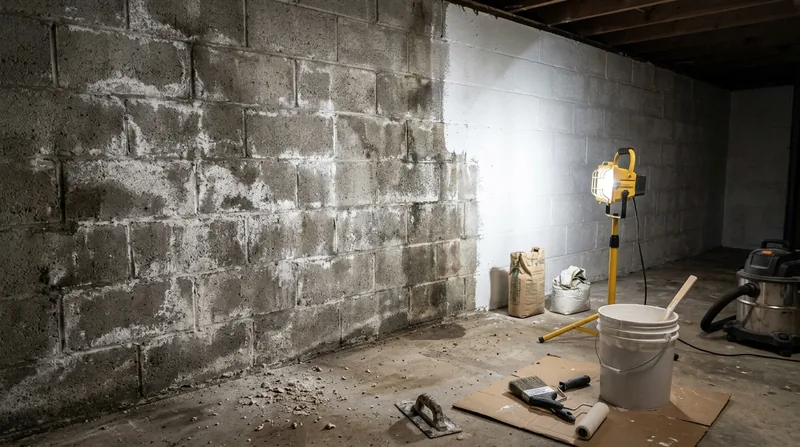




If you own a home off Western Boulevard or in one of the newer subdivisions near Gum Branch Road, you already know the pattern: a summer thunderstorm dumps two inches in an hour, the sandy coastal plain soil saturates fast, and water starts weeping through the block stem wall or along the slab edge. That is where Basement Wall Sealing in Jacksonville earns its keep, but only when it is matched to the right problem. We prep the surface, strip efflorescence, and apply penetrating or membrane sealers to damp block walls, and we tell you straight when a sealer will fix the dampness and when hydrostatic pressure from a water table only a few feet down means you need drainage instead. Most homes here sit on slabs with block stem walls, so the sealing work is concentrated at the slab edge, the lower block courses, and the window wells on the few walkout lots near the creek drainages. Call (910) 915-4979 to get a free look at what is actually pushing moisture through your wall. If you want the full picture of how sealing fits into a larger fix, start with our basement waterproofing service.
Why Basement Wall Sealing Matters on Jacksonville's Sandy Coastal Plain
Onslow County sits on sandy coastal plain soil over a water table that can rise within a few feet of grade, and the clay pockets along the creek bottoms hold that water against the foundation instead of letting it drain away. After a tropical system like Florence in 2018, or even a hard summer storm, the block walls wick moisture and you get efflorescence, peeling paint, and that damp musty smell in the below-grade rooms. Sealing is the right first move when the wall is damp but not actively leaking under pressure. Here is what we check before we touch a wall:
- We map the efflorescence pattern to see how high the moisture is wicking up the block.
- We check the slab edge and footing line for active seepage versus simple dampness.
- We test whether the dampness is surface condensation or water migrating through the masonry.
- We inspect window wells and grade on walkout lots where water stands against the wall.
- We confirm whether a sump basin or interior perimeter drain already exists and is working.
That inspection tells us whether you need a sealer or a drainage system, and we say so plainly rather than selling a coating that will fail by the next storm.
Key info: A 1970s brick ranch off Richlands Highway with white powder on the lower block courses usually has a wicking problem that a penetrating sealer handles well. A 2010s subdivision home near Piney Green Road with water standing at the slab edge after every storm has a hydrostatic pressure problem, and sealing alone will not hold it back.
For the regulatory side, structural work and any change to how water discharges from the property can require a permit, and thresholds vary by jurisdiction. Verify with the City of Jacksonville and Onslow County before work begins. You can check the City of Jacksonville official site for the current building department contact and permit guidance.
How We Seal a Damp Block Wall in Jacksonville, Step by Step
Sealing is a surface and masonry job, not a paint job, and the prep work decides whether it lasts. We start by washing the wall and removing efflorescence, because sealer applied over salt bloom and chalky mortar will peel within a season. Then we let the block dry to a realistic moisture level before we apply anything, since a wet wall will trap that moisture under the coating. Here is the sequence we run on a typical Jacksonville stem wall:
- We clear the wall of loose mortar, paint, and efflorescence with a wire brush and a masonry cleaner.
- We fill any shrinkage cracks in the block or mortar joints with a hydraulic cement or a suitable patch.
- We let the masonry dry and confirm the moisture reading before sealing.
- We apply a penetrating sealer on damp-but-sound block, or a membrane coating where the surface needs a barrier.
- We treat the slab edge and footing line separately, since that joint moves and needs a flexible detail.
- We check the grading and downspout extensions so water is not dumped back against the wall.
When the wall is actively leaking under pressure, we stop and recommend the right drainage fix instead, which you can read about on our interior drain tile system page.
Key info: On a block stem wall in a Sneads Ferry or Holly Ridge home, we often find the dampness stops about two courses up from the slab. That is a wicking pattern, and a penetrating sealer plus a downspout extension usually settles it. When the whole wall is wet and water runs at the floor joint during rain, that is pressure, and we tell the homeowner to look at drainage before sealing.
Sealing Approaches We Use and When Each One Fits
Not every wall takes the same product, and the wrong choice wastes money and comes back within a year. We match the approach to the masonry, the moisture reading, and whether the wall is damp or under pressure. This table shows the main options we work with on Jacksonville-area homes:
| Approach | Description | Best for |
|---|---|---|
| Penetrating sealer | Sinks into the block pores and blocks liquid water while letting the masonry breathe. | Damp block walls with efflorescence and no active seepage. |
| Membrane coating | Builds a flexible barrier on the face of the wall over a prepared surface. | Walls with fine surface cracks and steady dampness. |
| Crack injection | Epoxy or polyurethane injection through ports to fill and seal a crack full depth. | Settled or shrinkage cracks that leak at the slab edge. |
| Slab edge and joint detail | Flexible seal at the wall-to-floor joint where movement opens a gap. | Water tracking along the floor joint during rain. |
| Grade and downspout correction | Regrade the soil and extend downspouts so water moves away from the wall. | Water standing against the slab edge after storms. |
We pick from that list based on what the wall tells us, and we do not stack coatings on a wall that needs drainage.
Basement Wall Sealing Cost in Jacksonville: What to Expect
Most straightforward sealing jobs on a Jacksonville block stem wall start from $1,500, and that figure covers surface prep, efflorescence removal, and sealer on a typical run of wall. The number moves up with wall length, how much prep the block needs, whether cracks require injection, and whether the job includes grade and downspout corrections. A wall that is damp but sound sits at the low end. A wall with active seepage, multiple cracks, and a wet floor joint needs more work, and we price that after we see it. You can review the full range on our pricing page.
Getting two or three estimates is smart, because a low bid that skips the prep or seals a wall that is still wet will cost you again next storm season. Ask each contractor what they do about efflorescence, how they confirm the wall is dry enough, and whether they will tell you when sealing is not the answer.
Choosing a Basement Wall Sealing Contractor Near Me in Jacksonville
When you search for a sealing contractor near me in Jacksonville, the field is full of general handymen and foundation firms who will coat a wall and move on. Ask for proof of licensing and insurance, get the certificate in hand, and check references from jobs in your part of Onslow County. Confirm who pulls any permit the work requires, and check with your HOA before you change grading or discharge lines in a subdivision. A specialist who works below grade every week will tell you when a sealer is enough and when the water table is the real problem. Reach out through our contact page to schedule a look.
Basement Wall Sealing in Jacksonville: Pricing Guide
| Service | Price | Details |
|---|---|---|
| Single wall sealing, block stem wall | Starting at $1,500 | Includes surface prep, efflorescence removal, and penetrating sealer on a typical wall run |
| Full perimeter sealing with crack prep | Starting at $2,400 | Covers multiple wall runs, mortar joint patching, and flexible detail at the slab edge |
| Crack injection add-on | Starting at $450 | Epoxy or polyurethane injection per crack, priced by length and depth of the crack |
| Grade and downspout correction | Starting at $600 | Regrading soil and extending downspouts to move stormwater away from the wall |
| Complex or large-scale job | On estimate | Needs an on-site look when walls show active seepage, multiple cracks, or pressure |
| Estimate | Free | Response within 24h at (910) 915-4979, no obligation to book |
Indicative pricing, the exact cost depends on square footage, finish, and site access. Free personalized estimate within 24h at (910) 915-4979.


